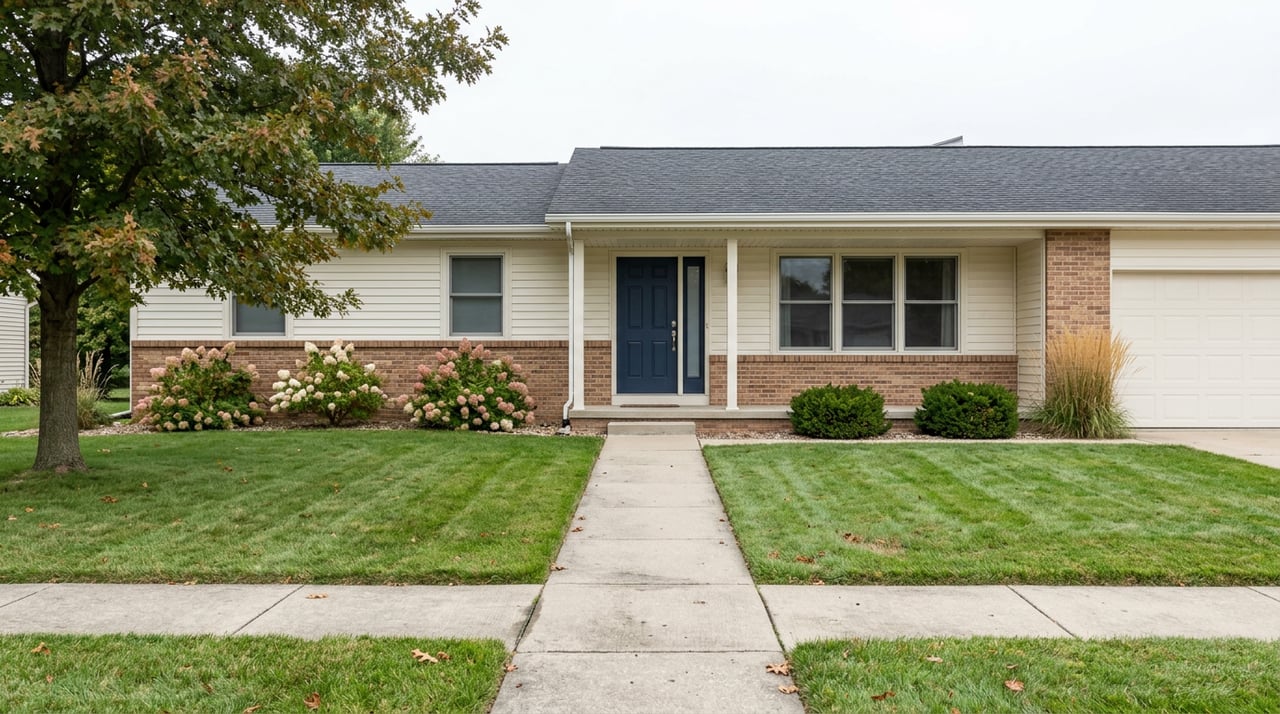
Pull up three different sources for home values in Macomb, MI and you will get three different numbers that do not agree with each other by a small margin. Zillow's tracker put the typical Macomb, MI home value at $387,028 as of June 2026. Movoto reported a median list price of $510,000 for July 2026, moving at 53 days on market. Realtor-reported ZIP snapshots through December 2025 put 48042 near a $589,900 median and 48044 closer to $444,950. These figures measure different aspects of the same township market, so they are not directly comparable.
Those figures are not directly comparable, and lot size, finish level, and timing can also shape prices within the market. Another consideration when comparing properties is that homes in Macomb Township do not all have the same utility infrastructure. Some homes tie into township water and sewer. Some still run their own well and septic system. Only one of those two categories comes with a required property-transfer evaluation that can add weeks to a closing if nobody planned for it.
How Utility Systems Relate to Home Prices
A meaningful share of properties across Macomb County still rely on private wells and septic systems rather than the public grid, a fact the Macomb County Health Department states plainly on its own site. That is not unusual for a township that grew up as farmland and got annexed into suburbia one subdivision at a time. Market data buyers see before making an offer may not identify a property's utility system.
If you are shopping by median price alone, you have no way of knowing whether the home you are about to tour is connected to the township's water and sewer system or running on its own well and drain field. That distinction matters because Macomb County regulation requires a property transfer evaluation for any purchase agreement involving a home on well or septic.
Homes on well or septic are, in the county's own language, "required by Macomb County regulation to have these systems evaluated prior to closing."
That requirement has been on the books since August 1, 2002. It is not new. A scheduling detail buyers should understand is how the evaluation can affect a closing timeline.
Planning for the Evaluation
The process is specific enough that skipping a step can cost you real time. Here is how it actually runs, according to the Macomb County Health Department's own property transfer guidance:
- The seller arranges an evaluation through either the Health Department or a private evaluator registered with the county.
- The septic tank must be pumped while the evaluator is physically on site. Pumping it in the 30 days before the evaluation without the evaluator present triggers a delay and possibly forces the whole process to restart.
- The well needs to be visible for inspection, which sometimes means digging up a buried wellhead beforehand.
- The completed report has to reach the county at least five days before closing. The Health Department's own guidance is blunt that waiting until the last minute is the single most common cause of delay.
- Once issued, the evaluation is valid for one year. If your transaction drags past that window, you evaluate again.
These steps may not appear in a listing description or a median price, but they can affect the closing timeline. Buyers and sellers can account for the evaluation early rather than wait until closing is near.
The moratorium that is still open
There is a second layer to this that makes the timing question sharper for anyone touching new construction or a septic replacement in the township right now. Effective December 10, 2025, the Macomb County Health Department placed a moratorium on the installation of all new construction septic systems, citing winter weather conditions that raise the risk of a poorly installed system. As of this writing, that moratorium is still listed as active with no end date announced.
For a buyer building on a well-and-septic lot, or a seller whose evaluation turns up a system that needs replacing rather than just pumping, that moratorium is not background trivia. It is the difference between a straightforward closing and one that waits on the county to lift a hold that has already stretched more than eight months with no published timeline for reopening. If your purchase agreement assumes a septic installation can happen on a normal contractor's schedule, it is worth confirming that assumption against the current status before you set a closing date.
What it costs to leave well and septic behind
Some buyers look at a well-and-septic property and decide the fix is simple: connect to township water and sewer and move on. Macomb Township's Department of Public Works handles connections. A water and sewer permit involves two separate charges, a tap fee based on the size of the service and a frontage fee based on the total front footage of the property.
In practice that means the cost of leaving a well and septic system behind is not a fixed number you can budget from a neighbor's experience.
What this means if you are the one under contract
Taken together, these factors suggest that utility infrastructure is one consideration alongside ZIP-code price comparisons. Because those ZIP-level medians are not directly comparable, they do not by themselves show whether utility systems account for price differences; they do, however, point to a property-level distinction buyers should check. Only one of those categories comes with a five-day filing deadline, a one-year expiration clock, and a county-level installation hold that has been open since December.
If you are buying or selling a well-and-septic home in Macomb Township, the smartest move is asking about the evaluation status before you are two weeks from closing, not after. If you are building new or planning a septic replacement, confirm the moratorium's current status directly with the county rather than assuming your contractor's calendar reflects it.
FAQ
Does every home in Macomb Township use well and septic? No. Much of the township is connected to public water and sewer through the township's Department of Public Works. Whether a specific property is on well and septic or public utilities depends on the parcel, not the ZIP code, and it is worth confirming directly rather than assuming based on price range or subdivision age.
How long does the property transfer evaluation actually take? The Health Department does not publish a fixed turnaround, but its own guidance stresses starting early because the report must reach the county at least five days before closing, and any repair, corrective action plan, or unsafe well sample adds time on top of that baseline.
What happens if the septic moratorium is still active when I need a new system installed? As of now the moratorium has no published end date. If your transaction depends on installing a new septic system, confirm the current status with the Macomb County Health Department's Environmental Health Division directly before you commit to a closing date, since a contractor's availability does not override a county hold.
Whether you are pricing a well-and-septic property correctly, timing a closing around a health department deadline, or figuring out what a frontage fee will actually cost before you commit to connecting to public utilities, this is exactly the kind of detail that gets missed when a transaction is coordinated across three separate people instead of one. Joan Schinderle King works both sides of that gap as a licensed Realtor and mortgage originator, which means the financing timeline and the transaction timeline get planned together from day one. If you are weighing a purchase or sale in Macomb Township, get in touch for a free home valuation or schedule a consultation to walk through what your specific parcel's utility status means for your timeline.
This article is general information, not legal, tax or financial advice. Consult a qualified professional about your situation.