Thinking about buying or leasing a small commercial property in Macomb? You are not alone. With a large local customer base, thousands of employer establishments, and active business investment across the county, Macomb offers real opportunities for small-business owners and investors who want to put down roots or expand carefully. If you are just getting started, this guide will walk you through the local market, key property types, financing basics, and the due diligence steps that matter most. Let’s dive in.
Why Macomb Draws Small Commercial Buyers
Macomb County has the scale that many first-time commercial buyers look for. The U.S. Census Bureau estimates 886,221 residents in the county, along with 19,593 employer establishments, $77,837 median household income, and $20.46 billion in retail sales. Those numbers point to a broad local demand base for neighborhood-serving businesses and service providers. You can review the county snapshot through the U.S. Census QuickFacts for Macomb County.
The county also reports that more than $408.7 million was invested in businesses in 2024. Macomb identifies automotive and mobility, aerospace and defense, automation and robotics, agriculture and food processing, and distribution and logistics as target industries on its business climate page. For you, that helps explain why smaller office, retail, service, and flex properties can be a practical entry point instead of chasing larger institutional buildings.
Best Small Commercial Property Types
If you are new to commercial real estate, it helps to focus on property types that match local demand and are easier to understand operationally. In Macomb County, that often means smaller spaces with clear day-to-day uses and established customer traffic patterns.
Small office suites
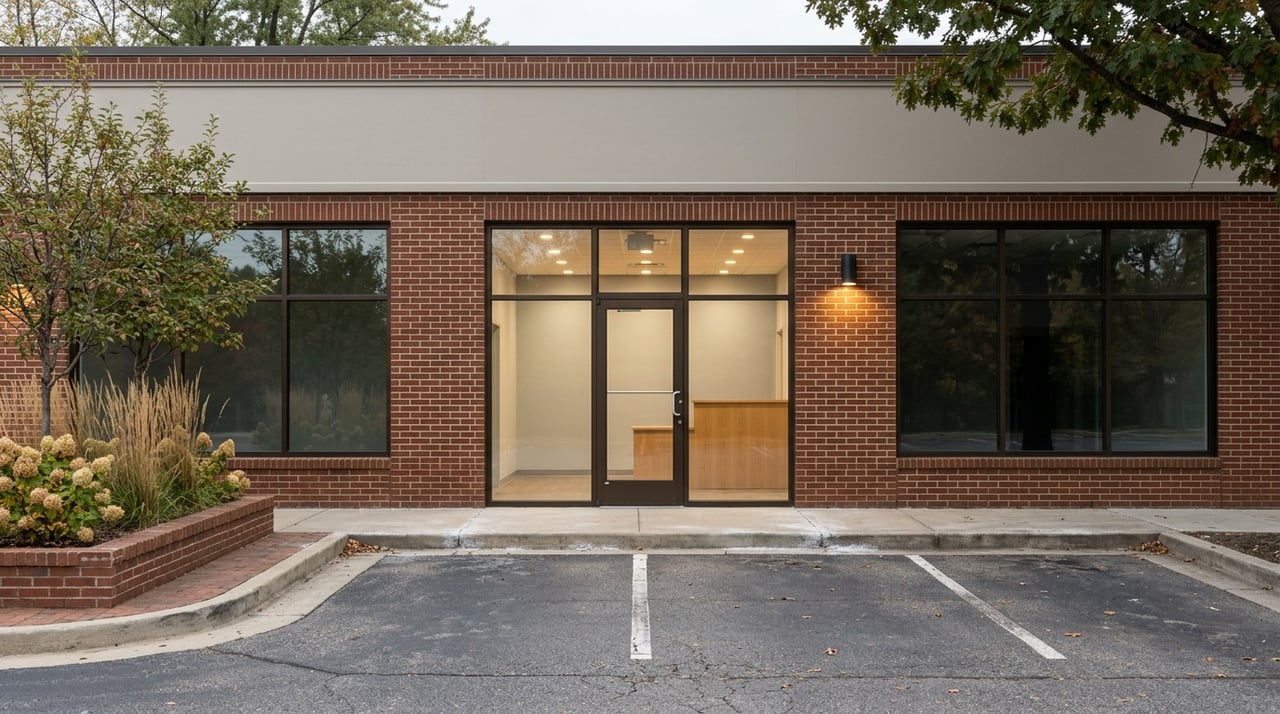
Small office properties can work well for professional services, medical-adjacent users, administrative businesses, and local firms that want a stable location. These spaces are often easier to evaluate because the use is straightforward and the layout tends to be more predictable.
Retail bays and storefronts
Neighborhood retail bays and street-facing storefronts can appeal to service-oriented businesses that rely on visibility and convenience. In county planning materials, major corridors such as Hall Road/M-59, M-53/Van Dyke, Gratiot, and Mound stand out as important commercial routes. Macomb County’s land-use and corridor planning documents also note retail concentrations near Hall Road and around Gratiot and 23 Mile in Chesterfield Township, which you can explore in the county’s land-use plan.
Mixed-use buildings
Mixed-use properties can offer flexibility, especially if you are looking at a storefront with office or residential space above or behind it. For some buyers, that creates more than one potential income stream, but it also means you need to understand operating costs and occupancy assumptions more carefully.
Flex and light industrial space
Flex buildings and light industrial properties often attract contractors, suppliers, service businesses, and companies tied to logistics or manufacturing support. These spaces can be especially relevant in a county with strong industrial and mobility-related sectors. Features like access, loading, and layout may matter more here than storefront appeal.
Lease or Buy First?
One of the first decisions you may face is whether to lease space or buy a property. The right answer depends on how stable your business needs are, how much capital you want to commit, and whether location control matters to your long-term plans.
Leasing usually gives you more flexibility. It can help you preserve cash, test a market, or adjust your footprint if your business is still changing. Buying can make more sense if you want to build equity, secure a long-term location, and avoid the uncertainty of future lease renewals.
Macomb County also highlights several tax and financing incentives that can affect the math, including Commercial Redevelopment and Commercial Rehabilitation abatements, brownfield support, Opportunity Zones, and PACE financing. The county describes PACE as 100% funding for qualified energy-efficiency upgrades repaid through property taxes over 5 to 20 years.
SBA Financing Basics
If you plan to buy and occupy the property for your business, SBA-backed financing may be worth a closer look. The SBA 7(a) program can be used to acquire, refinance, or improve real estate and buildings, with terms up to 25 years for real estate.
The SBA’s 504 program also supports long-term, fixed-rate financing for major fixed assets such as existing buildings, land, new facilities, and improvements. However, the SBA notes that 504 funds cannot be used for working capital, inventory, or speculation in rental real estate. For smaller business needs, the SBA microloan program can provide up to $50,000 for startup or expansion expenses, though it cannot be used to buy real estate.
Commercial Terms You Should Know
Commercial real estate gets easier once you understand a few core numbers. You do not need to become an underwriter overnight, but you should know the terms lenders, brokers, and sellers will use.
According to NAIOP’s industry terms and definitions, the key concepts include:
- NOI (Net Operating Income): Income after operating expenses, but before taxes and financing
- Cap Rate: First-year NOI divided by purchase price
- DSCR (Debt Service Coverage Ratio): NOI divided by annual debt service
- LTV (Loan-to-Value): Loan amount divided by property value
- Vacancy Rate: Vacant space divided by total inventory
These numbers help you answer basic questions. Is the property producing enough income? Is the price reasonable relative to income? Will a lender likely view the deal as safe?
Why Interest Rates Matter
Even if a property looks good on paper, financing can change the picture quickly. NAIOP notes that DSCR is a key lender risk measure, and higher interest rates can pressure debt service coverage. In practical terms, that means a property that feels affordable under one loan scenario may feel much tighter under another.
That is why first-time buyers should test several financing cases before moving forward. A small shift in rate, down payment, vacancy, or repair costs can change whether the deal still works comfortably.
Understand Lease Structures
If you are leasing instead of buying, it is important to know that the advertised rent is not always your real occupancy cost. NAIOP distinguishes between gross, modified gross, and net leases, and those structures can shift expense responsibility between landlord and tenant.
You should also ask about effective rent, concessions, escalations, and load factor. Shared expenses and common-area calculations can materially change what you actually pay over the life of the lease. For first-time tenants, this is one of the easiest places to overlook cost.
How to Evaluate Location in Macomb
Location always matters, but in commercial real estate, the reason a location works can vary by use. A retail or service property may depend more on visibility, occupancy, and nearby traffic. A flex or industrial space may depend more on access, loading, and operational efficiency.
In Macomb County, it helps to think in corridor-based submarkets. The county transportation plan frames major trade areas around roads such as Hall Road, M-53, Gratiot, and Mound, which is useful when comparing customer access and surrounding business activity. You can review those corridor references in the county’s long-range transportation master plan.
Do Your Due Diligence Early
Before you make an offer or sign a letter of intent, gather the facts that could affect your use of the property. This step is especially important if you are buying your first commercial space and assume the property can be used exactly the way you want.
Macomb County says its site and location research specialists can help identify available buildings or sites and provide information about transportation access, proximity to clients or competitors, workforce strength, and community amenities. That can be a smart first stop as you narrow your options.
If the property is in Macomb Township, zoning and permit review should happen early in the process. The township states that a Certificate of Zoning Compliance is required before a structure or premises is occupied, reoccupied, created, erected, changed, or converted. The township also notes that site development review can include setbacks, height, parking, lighting, site density, and zoning compliance, and that site plan approval for new commercial or industrial buildings is valid for two years.
A Simple First-Time Buyer Checklist
If you are preparing to enter the small commercial market in Macomb, start with a simple framework:
- Define your use clearly
- Decide whether flexibility or long-term control matters more
- Review financing options early
- Learn the core underwriting terms
- Compare properties by corridor and access
- Confirm zoning and occupancy requirements
- Stress-test the numbers before making an offer
This process can help you avoid rushing into a deal that looks fine at first glance but does not fit your business or investment goals.
Why Guidance Matters
Small commercial real estate has more moving parts than many first-time buyers expect. Between property selection, lease analysis, financing, zoning, and timelines, the details matter. Having a local advisor who understands both the Macomb market and the financing side can make the process more straightforward.
If you are exploring small commercial real estate in Macomb and want experienced, practical guidance, connect with Joan Schinderle King. She offers local market insight, full-service transaction support, and financing continuity to help you move forward with clarity.
FAQs
What types of small commercial properties are common in Macomb?
- Common options in Macomb include small office suites, neighborhood retail bays, mixed-use storefronts, and light industrial or flex buildings.
What is the difference between leasing and buying commercial property in Macomb?
- Leasing usually offers more flexibility and lower upfront capital needs, while buying can help you build equity and secure long-term control of your location.
What commercial real estate terms should beginners learn first?
- The most important beginner terms are NOI, cap rate, DSCR, LTV, vacancy rate, and the difference between gross, modified gross, and net leases.
Can SBA loans help with buying commercial real estate in Macomb?
- Yes. The SBA 7(a) and 504 programs may help qualified owner-users finance commercial real estate, while microloans can support some business needs but not real estate purchases.
What due diligence steps matter before buying commercial property in Macomb Township?
- Early due diligence should include zoning review, occupancy requirements, site development rules, permit needs, and confirmation that the property fits your intended use.